

Article Content Automation is not about doing something once. Automation is about doing something a million times, reliably. In traditional software engineering, we achieve this through idempotency—the property where an operation can be applied multiple times without changing the result beyond the initial application.
The Idempotency Challenge AI is inherently non-idempotent. If you ask an AI to “update a record” twice, you might get two different SQL statements. This is a disaster for automation. To build reliable AI automation, we must wrap the AI in an idempotent control loop.
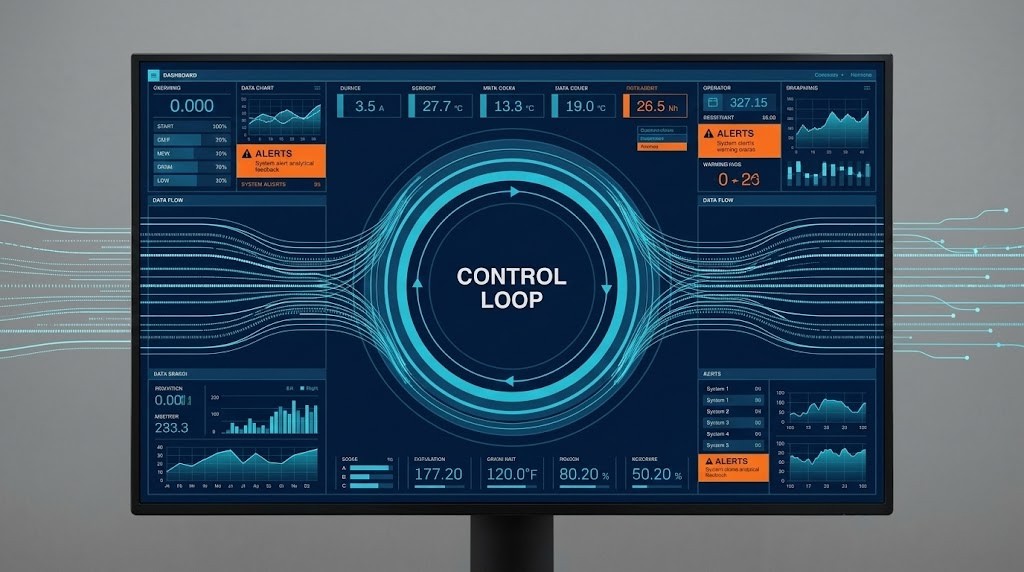
Closed-Loop Control We should borrow from industrial control systems. A closed-loop system constantly measures the difference between the “desired state” and the “actual state.” The AI acts as the controller, but the system itself enforces the final state.
Plaintext
+----------------------------------------+
|           System Controller            |
|  (State Comparison + Enforcement)      |
+------------------+---------------------+
                   ^
                   | (Action)
        +----------+----------+
        |  AI Automation      |
        |  (Proposer)         |
        +----------+----------+
                   | (Proposal)
                   v
+------------------+---------------------+
|        Monitored Environment           |
+----------------------------------------+
Observability vs. Prediction The goal is not to predict what will happen, but to observe what has happened. If the AI proposes an action, the automation engine executes it, then verifies the outcome. If the state hasn’t moved toward the goal, the system retries or alerts.
Failure as Feedback In a reliable system, AI failure is expected. The system is designed to identify the failure and feed it back into the loop as diagnostic information. This creates a self-healing loop that doesn’t depend on the “correctness” of the AI.
Conclusion Building reliable AI automation is not about making the AI perfect. It is about making the system resilient to AI failure. By embracing idempotency and closed-loop control, we can deploy AI into production with confidence.